
How Businesses Lose 20–40% of Revenue — Even When Clients and Traffic Exist
A real case study showing where money is lost after the first customer interaction and how a system-based approach fixes it.
Max Lebedev
CEO of Sharcon LLC
15+ years in marketing and development. Leading a team of 30+ professionals at Sharcon.
How Businesses Lose 20–40% of Revenue — Even When Clients and Traffic Exist
Where the Money Is Actually Lost
Clients come from ads, Google, referrals, or word of mouth. A purchase or inquiry happens. Then, in most cases, nothing systematic follows.
The business does not retain or reuse the contact. Follow-ups are inconsistent or missing. Repeat sales happen randomly, if at all.
This is not a problem of traffic. It is not a problem of product quality or pricing. It is a problem of structure.
The issue is not traffic or demand. The issue is the lack of a system that keeps clients inside the business after the first interaction.
The Situation at Tap Beer Miami
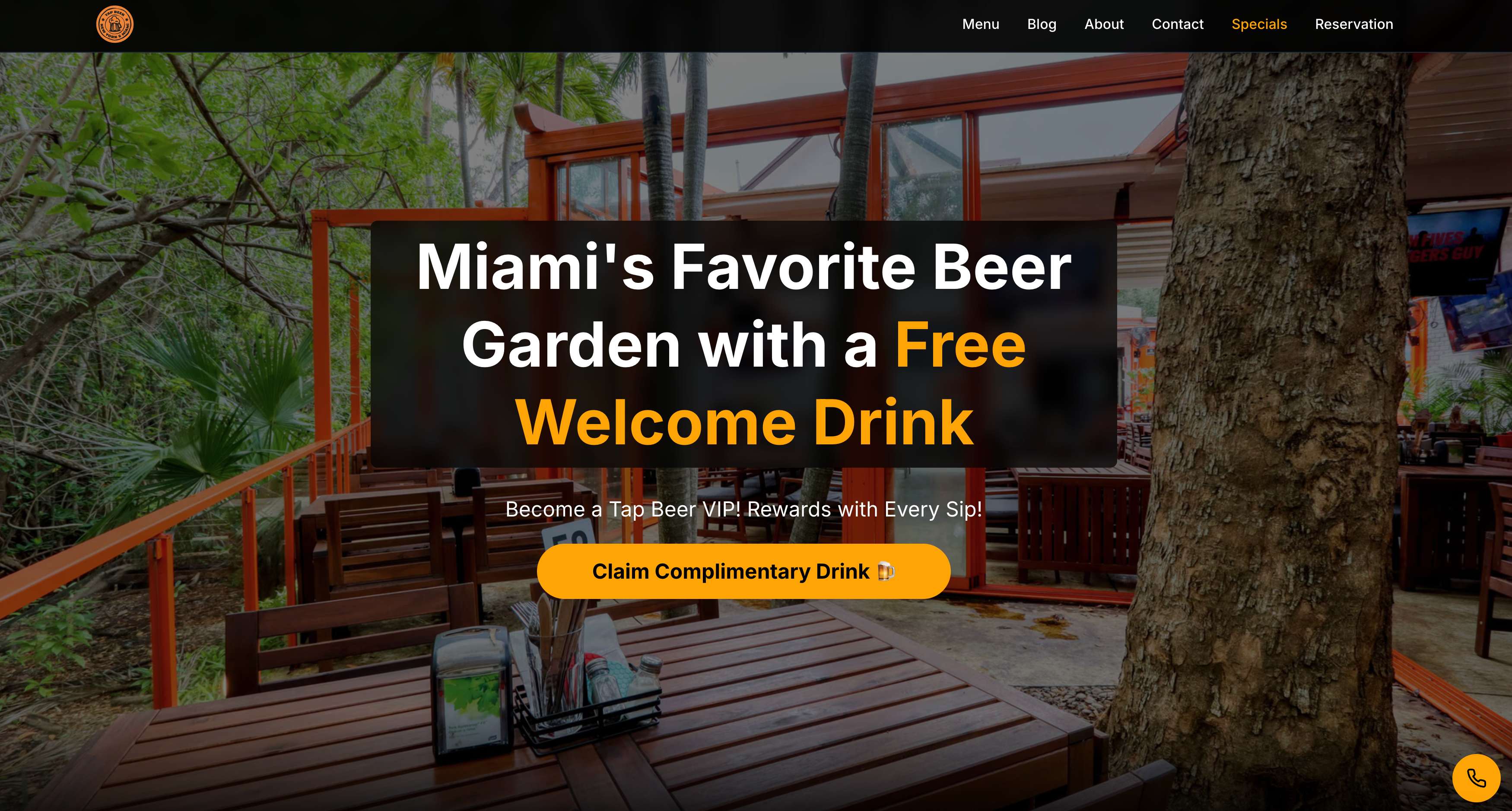
Tap Beer is a European-style beer garden in Miami. Guests were coming regularly. Events and promotions were running. Advertising was used from time to time.
But there was no unified client database. No structured follow-up or retention logic. Growth existed, but it was not predictable or measurable.
When a guest visited, placed an order, or attended an event, the interaction ended there. Unless the guest decided to return on their own, the business had no systematic way to re-engage them.
The business was functioning. But it was leaking revenue at every stage after the first contact.
What Was Implemented
The solution was not about adding more traffic. It was about controlling what happened after the first interaction.
The website became a controlled entry point, not just a page. Client data started flowing into one centralized system. Contacts were captured both online and offline — through the website, QR codes at tables, WiFi access, and event sign-ups.
Automated SMS and email communication was introduced. Follow-ups were no longer dependent on manual actions. Once a client entered the system, further communication continued automatically.
A welcome message. A reminder about upcoming events. A birthday offer. A win-back message for clients who had not visited in 30 days.
Key line: Once a client entered the system, further communication continued automatically.
The owner did not need to remember to send emails. The system did it.
Results After Implementation
Results were achieved without increasing advertising spend or adding manual workload for the owner.
- 1,000+ real contacts collected in the centralized system
- ~40% increase in repeat visits and purchases
- Approximately 2% unsubscribe rate (industry average is 5–10%)
- Top-3 Google Maps visibility for local searches in Miami
All results were achieved without increasing advertising spend or adding manual workload for the owner.
Why This Case Is Relevant Beyond One Business
This is not about restaurants. This is not about Miami. This is about a universal business pattern.
The logic is not industry-specific. Any business with clients and repeat potential faces the same risk. A fitness studio. A dental clinic. A car wash. A consulting firm.
If clients come once and you have no system to bring them back, you are losing revenue that already exists.
Traffic without retention always leaks revenue.
Most businesses focus on getting more clients. But the clients they already have represent untapped revenue that costs nothing to activate.
How This Approach Is Applied Elsewhere
Each business starts with analysis of its current client flow. Where do clients come from? What happens after the first interaction? Where does communication break down?
Points of revenue loss are identified. Not guessed. Identified through data.
A system prototype is created to visualize the solution before decisions are made. No commitments. No assumptions. Just a clear picture of what the system would look like and how it would function.
Then, if it makes sense, it is built.
Who This Approach Is For / Not For
Works best for:
- Businesses with existing clients
- Owners who want predictable growth
- Teams tired of manual follow-ups
Not suitable for:
- Startups with no traction
- Businesses without repeat potential
- Anyone looking for quick hacks or cheap fixes
Closing
If clients already find your business but do not return as often as they could, the problem is rarely demand.
It is usually the system behind the first interaction.
Most businesses have the traffic. They have the product. They have clients who are willing to buy again.
What they do not have is the structure to make it happen consistently.
Max Lebedev
CEO of Sharcon LLC
15+ years in marketing and development. Leading a team of 30+ professionals at Sharcon.
Ready for similar results?
Let's discuss how we can help your business achieve its goals through our proven marketing and automation strategies.
- Custom tailored strategies
- Expert implementation team
- Measurable ROI